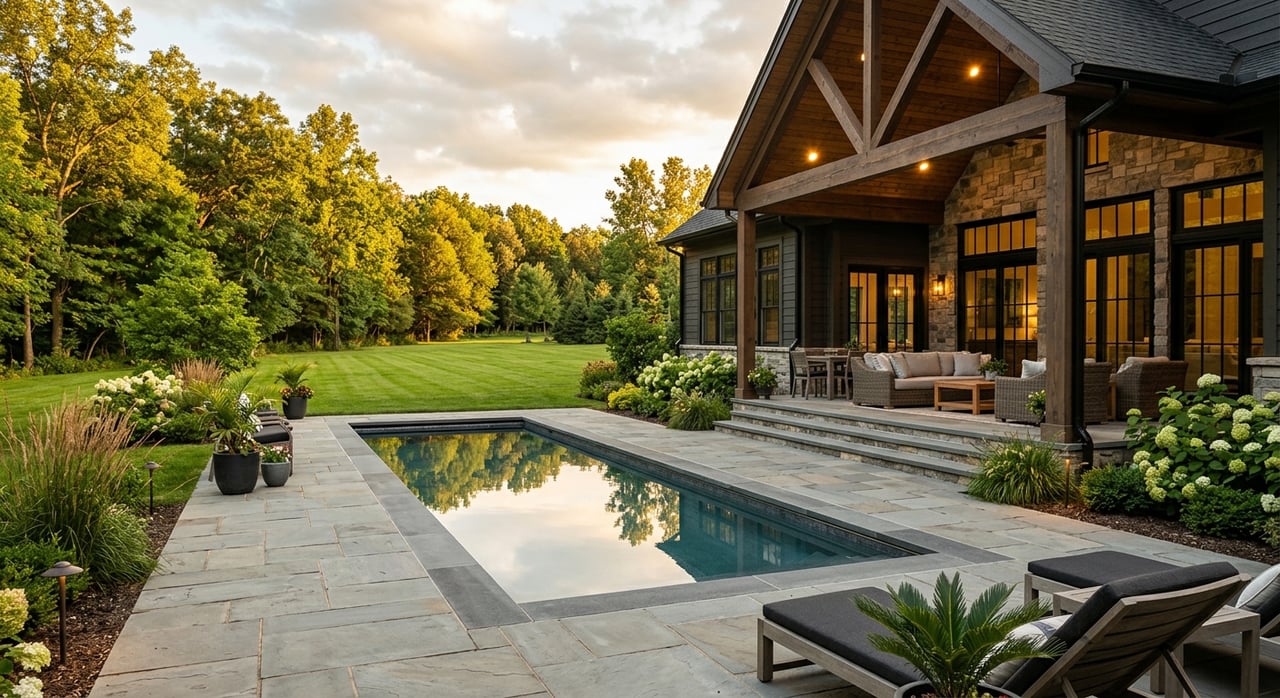
Potomac Luxury Living: Estates, Trails, And River Access
April 16, 2026
April 16, 2026
If you want more space, more privacy, and easier access to the outdoors without feeling cut off from Washington, DC, Potomac deserves a close look. For many buyers, the challenge is finding a neighborhood that feels peaceful and residential while still supporting daily life with trails, shopping, dining, and a workable commute. Potomac stands out because it brings those pieces together in a way that feels both refined and practical. Let’s dive in.
Potomac has a very different feel from many closer-in suburban communities. According to the U.S. Census Bureau, Potomac had a 2020 population of 47,018 across 25.13 square miles of land, with a population density of 1,871.2 people per square mile.
That lower-density pattern helps explain why so many buyers associate Potomac with more breathing room. The same Census data shows an 84.8% owner-occupied housing rate, a median owner-occupied home value of $1.157 million, and a median household income of $236,675. Taken together, those numbers support Potomac’s reputation as a high-value, luxury-oriented residential market.
County planning documents add another important layer. Montgomery County describes the Potomac subregion as a large-lot residential area, which reinforces the sense of estate-style living rather than a compact, town-center layout. If you are looking for a home environment that prioritizes space and privacy, that distinction matters.
When people talk about luxury living in Potomac, they are often talking about the overall setting as much as the houses themselves. The area’s land-use pattern supports larger residential lots and a more open suburban feel, which can be hard to find in parts of the DC metro that are built more densely.
For buyers, that often translates into a different day-to-day experience. You may find more separation between homes, larger yards, and a quieter rhythm than in more urbanized nearby communities. In practical terms, Potomac appeals to people who want room to spread out while staying connected to the region.
That does not mean isolated living. Instead, Potomac offers a balance: estate-style surroundings with access to commercial centers, outdoor recreation, and nearby city connections. That mix is a big reason the area continues to draw move-up and luxury buyers.
One of Potomac’s biggest lifestyle advantages is how close you are to some of the region’s most recognized trail and park experiences. The C&O Canal National Historical Park stretches 184.5 miles from Washington, DC, to Cumberland, Maryland, and its towpath is part of the Potomac Heritage National Scenic Trail.
That gives Potomac a strong connection to hiking, biking, and scenic outdoor time. Visit Montgomery highlights destinations such as Great Falls Tavern Visitors Center, Great Falls Overlook, and the Billy Goat Trail as major recreation anchors along the canal corridor. For residents, that means you are not just near green space. You are near some of the best-known outdoor routes in the area.
This is especially appealing if you want luxury living that still feels active and grounded. Potomac offers the kind of setting where a weekend bike ride, a long walk, or a trail outing can be part of your normal routine.
For local access, the National Park Service identifies the C&O Canal Entrance Station on MacArthur Boulevard in Potomac. That is an important detail because it shows that the canal experience is not just nearby in a broad regional sense. It is directly tied to Potomac itself.
The park service also notes that kayaking and rafting are permitted at your own risk, while swimming and wading are prohibited. So if you are picturing river access in Potomac, it is best understood as scenic and activity-based rather than casual waterfront lounging.
That distinction matters for buyers who want accurate expectations. Potomac’s river and canal appeal comes from views, trails, nature access, and select recreation, not from traditional beach-style water use.
Potomac’s outdoor lifestyle is not limited to the canal corridor. Cabin John Regional Park trails add another layer of everyday accessibility, with about 4 miles of natural-surface trail and less than 2 miles of hard-surface trail.
Montgomery Parks also notes that the Cabin John Stream Valley Trail runs from the park toward MacArthur Boulevard near the C&O Canal and Potomac River. That connection helps create a broader outdoor network, which is part of what makes Potomac so appealing to buyers who value both home and lifestyle.
Another local option is Blockhouse Point Conservation Park, which offers views of the Potomac River and the C&O Canal. Together, these parks and trail systems help define Potomac as a place where nature is part of your weekly routine, not just a special outing.
The phrase “river access” can mean different things in different markets, so it is worth being precise. In Potomac, river access is best understood as proximity to the Potomac River corridor, canal trail systems, overlooks, and permitted water activities such as kayaking and rafting in designated contexts.
That still creates a strong lifestyle draw. You get the visual and recreational value of the river environment, plus access to trails, overlooks, and conservation land. For many buyers, that is exactly the right mix: beautiful natural surroundings without giving up the comfort of a well-established residential community.
A luxury location needs more than beautiful homes and scenic trails. It also has to work in real life. Montgomery County’s Potomac Subregion Master Plan identifies Potomac Village, Cabin John, and Montgomery Mall as the area’s three commercial centers, which helps explain why daily convenience remains part of the Potomac experience.
At the local level, Potomac Place Shopping Center supports the idea that shops, services, and restaurants are built into the community around River Road and Falls Road. That makes errands and casual dining easier to manage without leaving the area.
Cabin John Village is another important local retail node in Potomac. The area also includes Park Potomac dining options such as Founding Farmers and Gringos & Mariachis at Potomac addresses, which adds variety to the local lifestyle picture.
For broader choices, Visit Montgomery notes that Bethesda and Rockville are nearby hubs for shopping, dining, and entertainment. So while Potomac feels spacious and residential, it does not feel disconnected.
One of Potomac’s most appealing qualities is that it offers a quieter residential base while staying tied to the Washington market. Visit Montgomery’s regional map places Potomac about 14 miles from the National Mall.
That distance helps explain why Potomac works for buyers who want space but still need access to the city. The Census Bureau reports a mean commute time of 29.7 minutes, which gives useful context for how Potomac fits into the broader DC-area lifestyle.
Of course, commute experience depends on your destination, schedule, and travel habits. Still, the data supports a simple takeaway: Potomac gives you room to live without moving too far away from the region’s economic and cultural center.
Potomac often makes sense for buyers who want their home to support both privacy and convenience. If your priorities include larger lots, a more established residential setting, outdoor recreation, and access to the broader DC metro, this area checks a lot of boxes.
It can also be a strong fit if you are comparing suburban options and want something more estate-like than a denser neighborhood can offer. The area’s housing profile, owner occupancy, and land-use pattern all point in that direction.
For sellers, these same lifestyle features can shape how your home is positioned in the market. Buyers are often responding not just to square footage or finishes, but to the full Potomac lifestyle story: space, trails, river corridor access, and proximity to daily conveniences.
If you are considering Potomac, it helps to define what luxury means to you before you start touring homes. For some buyers, it is lot size and privacy. For others, it is direct access to trail systems, closeness to shopping nodes, or an easier link to DC.
That is why a patient, education-first approach matters in this market. Potomac has a clear identity, but different sections and properties can deliver that identity in different ways. Knowing your priorities early can help you evaluate homes with more confidence and less guesswork.
If you are buying or selling in Potomac, I can help you make sense of how the lifestyle, property type, and market positioning fit together. You can connect with Eva Nihal for thoughtful guidance tailored to your goals.
Stay up to date on the latest real estate trends.



Monthly Blog
With Eva, real estate is more than a transaction—it’s about building long-term relationships, creating opportunities, and helping people achieve their version of the American Dream.